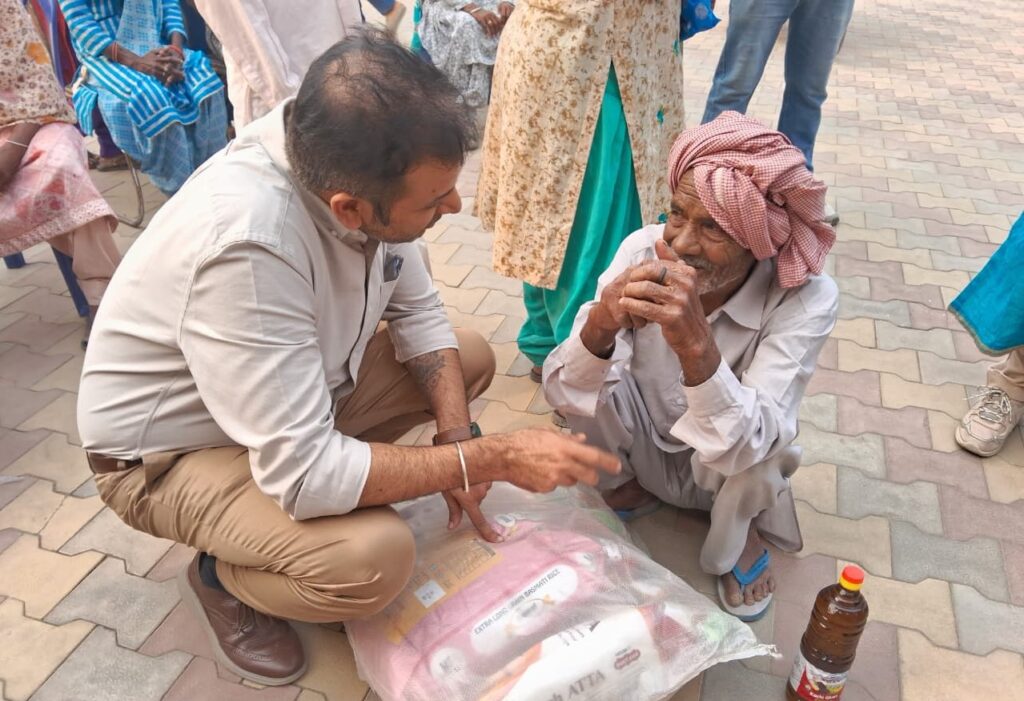
From 3 to 6 November, 2025, I travelled to Punjab’s Gurdaspur and Patiala districts with the HelpAge India team, just a few months after joining the organization. The visit came in the aftermath of one of the most devastating monsoon seasons the region has seen in years. Unprecedented rains had caused the Ravi River to overflow, flooding villages, destroying homes, and wiping out livelihoods across large parts of Gurdaspur and neighboring districts.
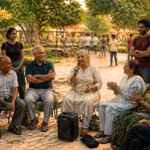
On 4 November, I was present at a relief distribution organized in a school compound near the riverbank. HelpAge India was providing dry ration support to families who had been hardest hit by the floods. Our local teams had identified and mapped over 500 vulnerable families, most of them dependent on daily wage labour and living at the very margins even before the disaster struck.
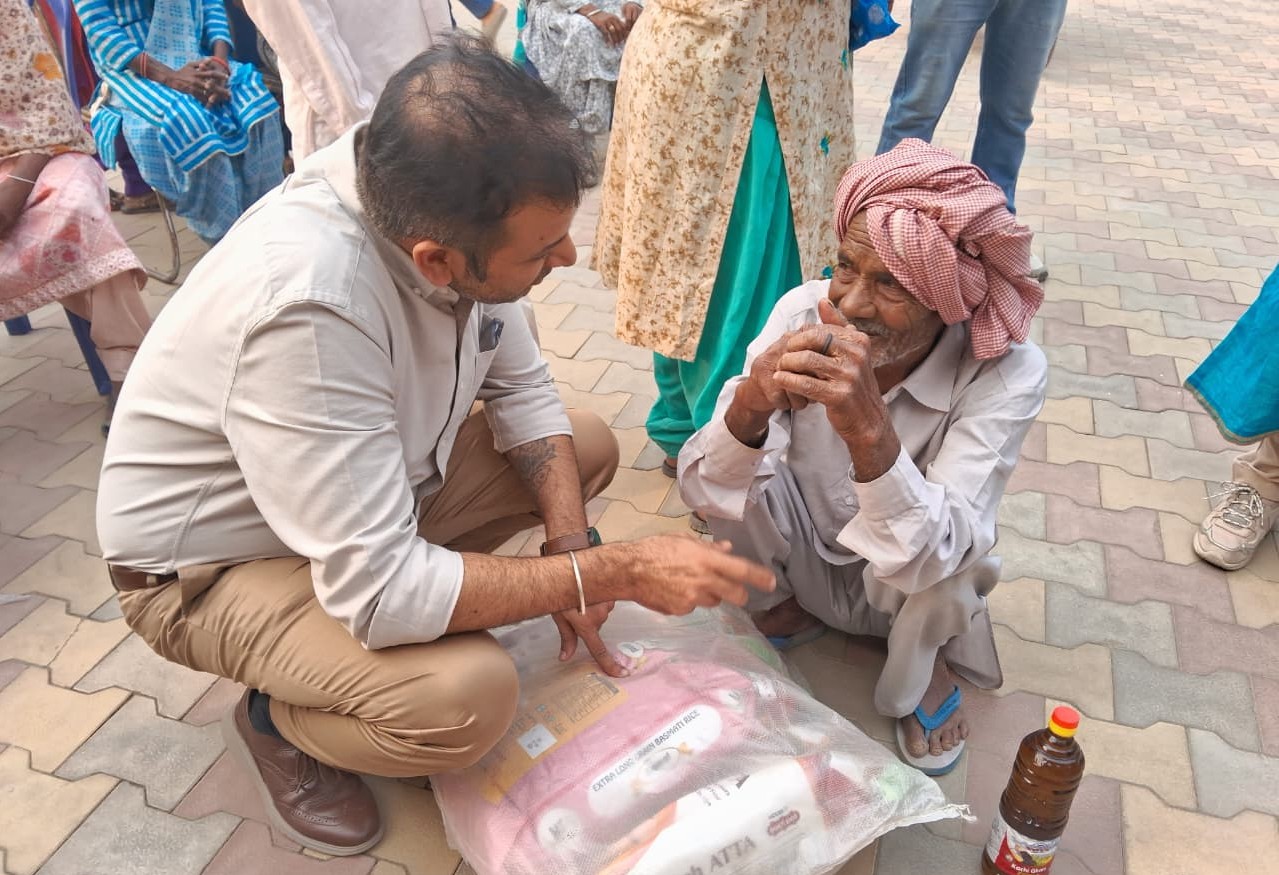
As I walked around the site, observing the distribution and speaking to people, one man quietly caught my attention.
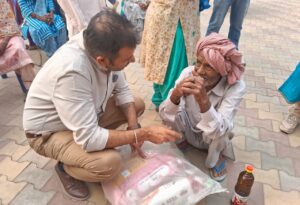
His name was Baljinder ji (name changed). He was in his late 60s, visibly frail, sitting slightly apart from the crowd. There was something about the way he sat, calm yet weighed down, that made me stop and sit beside him.
Our conversation did not flow easily. Baljinder ji spoke in his local Punjabi dialect, and I struggled to fully understand his words. There were moments when I had to ask him to repeat himself, moments of silence where we both searched for understanding. Still, I stayed. I listened carefully, watched his expressions, and slowly, piece by piece, his story unfolded.
His home had been destroyed in the floods. He had lost family members. Now he was responsible for his wife and young grandchildren. Before the floods, he worked as a daily wager, earning just enough to get by. After the relentless rains, the fields were flooded, farms destroyed, and work had completely dried up. With no income and nowhere to go, he moved from one temporary shelter to another. At one point, he even tried going to the neighboring Pathankot district, hoping to find work. There was none.
What struck me most was not just the hardship he described, but the way he described it. There was grief, yes, but there was also restraint and dignity. He did not complain. He spoke simply, as someone trying to make sense of a life that had suddenly become uncertain.
Around us, volunteers were distributing dry ration kits to families. When I asked Baljinder ji what he wanted most, he answered without hesitation.
He said he wanted to be able to work again so that his grandchildren would not go to bed hungry.
That sentence stayed with me.
In moments like these, humanitarian work stops being about relief materials and logistics. It becomes about listening, about recognizing the quiet strength of people who have lost almost everything and still hold on to responsibility and hope.
What I witnessed in Gurdaspur was not just an emergency response, but a thoughtful and compassionate approach. HelpAge India’s teams were not only distributing rations. They were identifying families who had fallen through the cracks, paying special attention to older persons who are often overlooked during disasters, and laying the groundwork for continued support beyond immediate relief.
For many of these 500 families, this assistance meant more than food for a few days. It meant being seen. It meant knowing that someone cared enough to reach them, understand their situation, and stand with them during one of the hardest moments of their lives.
I felt genuinely fortunate to be part of this journey. In just 3 months with HelpAge India, this visit transformed my understanding of what meaningful humanitarian work looks like. It reinforced my belief that impact lies not only in responding quickly, but in responding with patience, respect, and a long-term commitment to dignity.
As I left Punjab, I carried with me both a sense of urgency and hope. There is still so much to be done. Recovery from floods like these takes time, especially for families who were already vulnerable. But I also left with confidence that HelpAge India will continue to walk alongside them, long after the waters have receded.
And I look forward to being part of that journey, learning, contributing, and doing everything I can to ensure that stories like Baljinder ji’s are not forgotten.
This blog has been written by:
Mr. Kunal Kishore
Mission Head – Agecare, HelpAge India