Reflections from a Field Visit on Community Palliative Care
My last field visit of the year was a lesson in empathy, care and dignity.
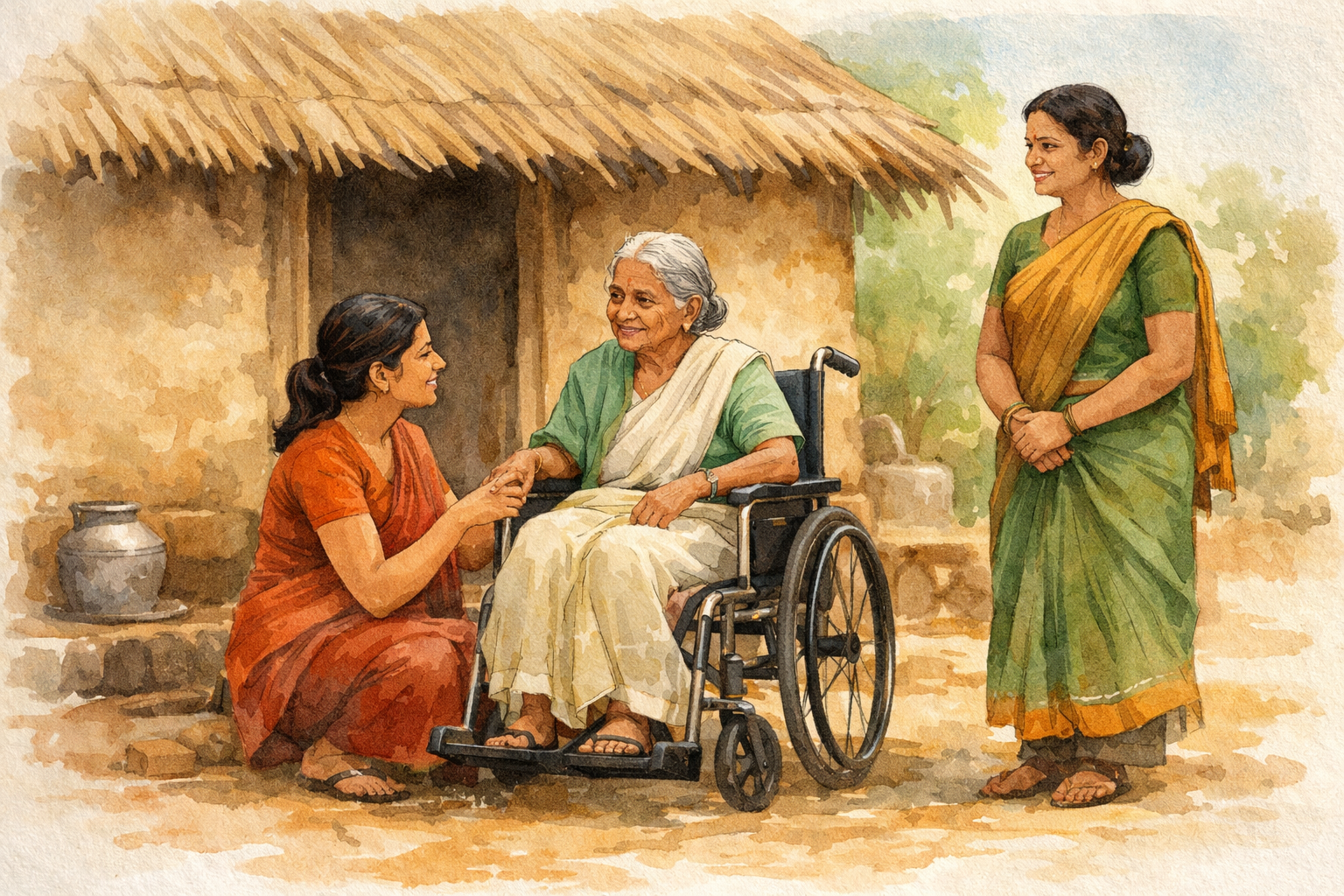
Nearly 10 kilometres away from Cuddalore (Tamil Nadu), in a small village, stands a hut barely large enough for two people. Its low roof is made of dried leaves, the walls are of mud, and lying on the ground is a single bedding. This is where Meenamma (name changed), a 78-year-old woman, lives alone—frail, dependent, and surviving on the kindness of others.
When we arrived, she was lying quietly, unable to attend to even her most basic daily needs. Age, frailty, and a malunited fracture in her leg, made the simplest of tasks—eating, bathing, or turning in bed—extremely difficult.
Meenamma has no one living with her.
Care with Compassion
Her great-granddaughter-in-law, Shanti (name changed), is her primary caregiver. Shanti also has a family of her own to care of and manages household responsibilities with limited income. The doctor at the district hospital had advised continuing medicines and caring for Meenamma at home, but without support, caregiving quickly became overwhelming.
A woman from the neighbourhood takes turns to check on Meenamma. Neither Shanti nor the neighbour are trained caregivers. They are women managing households of their own, offering care voluntarily—out of compassion, not capacity.
Despite their efforts, there were moments when Meenamma’s health needs required specific management beyond what informal care could provide.
Care Closer to Home
This is where community palliative care made a difference—for Meenamma and for Shanti.
A trained team of health professionals and community workers stepped in. They assessed Meenamma’ s condition, managed her symptoms, listened patiently, and provided the required medicines. Equally important, they trained Shanti and neighbourhood volunteers in basic caregiving—positioning, hygiene, comfort, and observation.
The team also supported referral linkages and arranged transportation to the district hospital when further medical care was needed.
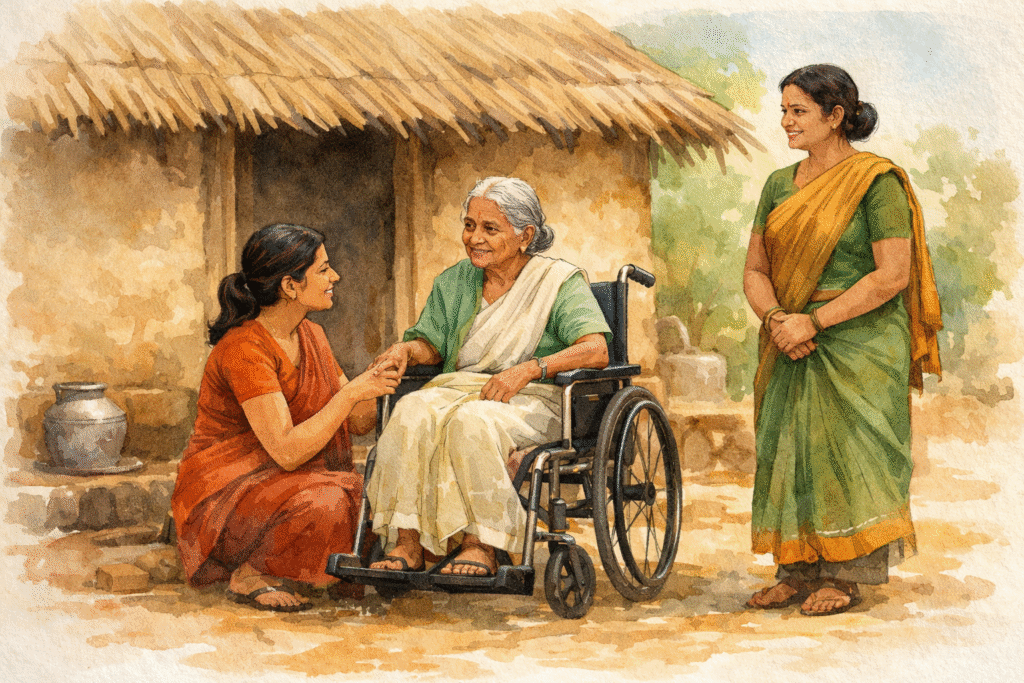
Today, Meenamma has a wheelchair. She can sit up, move with support, and engage more with the world around her—with the help of Shanti and other community volunteers.
And Shanti, once overwhelmed, is now a trained community volunteer—supporting not only Meenamma, but also other older persons in need in the vicinity.
Everyone Has a Role in Palliative Care
The quiet support extended to Meenamma by her neighbours, reminds us that compassion already exists in our communities. With training, guidance, and system support, care is possible at or near home—even in the most resource-constrained settings.
Community palliative care is about recognising, supporting, and strengthening care within the community, so that no older person suffers due to lack of access to care.
Care, at its core, is a shared responsibility.
As I look back on this field visit, I am reminded that true care is not confined to hospitals or institutions—it begins within the community, in the everyday acts of compassion & kindness shown by neighbours, family members, and volunteers.
This blog has been written by:
Dr. Ritu Rana
Mission Head – Healthcare, HelpAge India