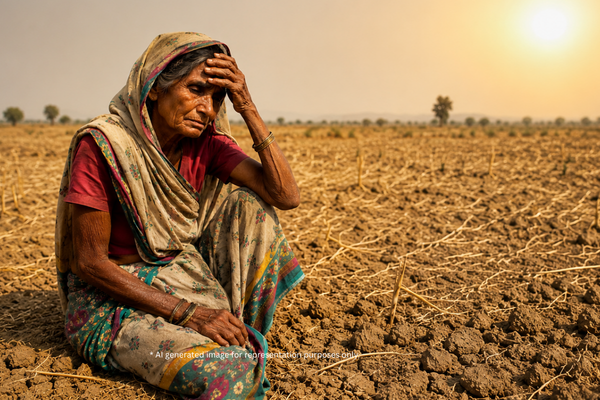
“There is pain in my hands and feet. Headache and feeling uneasy. Blood pressure increases. We have to work in the sun, and the sun is very intense. Excessive sweating, feeling uneasy, feeling dizzy“- elderly widow, from Nandurbar district, Maharashtra.
“There are no rains, sir. No crops are growing at all. … It is difficult, sir. How can we manage in this heat? … Even if you go, you get heatstroke, fall, and have to go to the hospital” – an elderly woman in her sixties, reported from Anantapur, Andhra Pradesh.
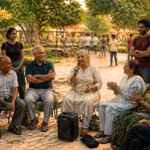
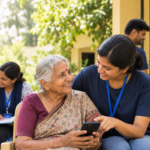
These are just some older voices that emerged from a recent report by HelpAge India on the impact of climate change on older persons, which I was working on.
Rethinking Climate Resilience for India’s Ageing Population: An Intersectional Perspective
India’s rapid demographic transition is unfolding alongside a growing climate predicament. Increasing number of older persons are getting exposure to climate-related risks such as heatwaves, floods, droughts, water scarcity, and environmental degradation. These are no longer occasional shocks but recurring stresses that deepen existing social, economic, and health vulnerabilities. Findings from our recent multi-state study highlight a crucial lesson: building climate resilience for older persons is not simply about responding to hazards — it requires addressing the inequalities that decide how risks are experienced and managed.
Moving Beyond Age as a Risk Factor
A key insight from the study is that vulnerability in later life cannot be explained by age alone. Risks are shaped by an intersection of multiple factors including gender, widowhood, disability, income, living arrangements and location. For example, an older widow living alone in a flood-prone area with limited income, faces very different challenges from a married older man with pension and family support.
Using an Intersectional Place Perspective (IPP), the study examined how these overlapping vulnerabilities interact with local environmental conditions. The findings show that climate risks are both socially produced and geographically experienced, underscoring the need for place-based and differentiated policy responses.
Widespread Exposure, Unequal Impacts
The study covered more than 2,200 (60+) respondents across 20 climate-stressed districts in 10 states. Nearly 78% reported experiencing at least one climate-related hazard in the previous three years. Heatwaves (45%), floods (27%) and droughts (20%). More than one-third experienced moderate to severe impacts.
However, the burden was not evenly distributed. Older persons with impairments, those living alone, and those residing in fragile housing faced significantly greater risks. Poor ventilation, indoor heat stress, damp conditions, and inadequate access to water, amplified existing health and mobility challenges, particularly among those with chronic illnesses.
Climate Change, Health and Care
Health emerged as the primary pathway through which climate change affects the respondents. Nearly half, did not consider themselves to be in good health, while chronic conditions such as mobility limitations, vision impairment, and hypertension were common.
Climate shocks frequently worsened these conditions. During heatwaves, nearly three-quarters reported increased illness, while one-third experienced difficulties accessing healthcare. Distance to facilities, treatment costs, mobility limitations, and lack of accompaniment were major barriers, especially for those living alone.
The study also highlights growing pressures on care systems. Family remains the dominant source of care, with 94% of respondents relying primarily on family members. Yet migration, smaller household sizes, and economic pressures are weakening traditional support structures. This is particularly concerning for the 13% respondents living alone, many of whom reported unmet care needs, social isolation, and difficulties accessing essential services.
Economic Insecurity Limits Resilience
Financial vulnerability remains widespread. Nearly half of respondents were economically dependent, and over 90% had a monthly income below ₹10,000. Although pension coverage has expanded, economic hardship remains pervasive. More than three-quarters reported at least one major financial difficulty, including challenges in purchasing medicines or adequate food.
Many older persons continue to depend on climate-sensitive livelihoods such as agriculture and informal labour. Declining physical capacity, limited productive assets, and uncertain income opportunities reduce their ability to cope with and recover from climate-related disruptions. As a result, economic insecurity becomes both a driver and consequence of climate vulnerability.
The Strength and Limits of Family Support
Families continue to serve as the primary source of emotional, financial, and practical support. Most respondents reported regular interaction with family members and felt respected and cared for.
Yet important gaps persist. Older persons living alone, widowed individuals, and those who never married, were significantly more likely to experience loneliness and isolation. Among those living alone, daily family contact was uncommon, and access to emergency assistance more uncertain.
Community networks can provide an important additional layer of support, but participation in organised groups remains limited, 20% respondents reported weak or absent community support. As climate-related shocks become more frequent, strengthening both family and community-based support systems will be essential.
Institutional Response
Government programmes, particularly pensions and food security schemes, are widely recognised and valued. However, significant barriers continue to limit access. Lack of awareness, documentation requirements, cumbersome procedures, and mobility constraints disproportionately affect the most vulnerable.
Nearly 20% respondents reported being excluded from schemes for which they were eligible. Institutional responses also tend to focus on sudden disasters such as floods and cyclones, while slower-onset stresses like heat and water scarcity often receive less attention despite their significant impact on older persons.
Fragmented governance compounds these challenges. Disaster management systems frequently operate separately from social welfare and health departments, resulting in gaps in addressing the specific needs of older persons during climate emergencies.
Resilience Is Unevenly Distributed
Despite considerable challenges, older persons demonstrate notable adaptive capacity. Many employs practical coping strategies such as storing food and water, adjusting daily routines during extreme weather, drawing on family and community support, and accessing available government assistance.
The study’s Composite Resilience Index indicates a moderate-to-high average resilience score of 57.1 out of 100. However, resilience varies significantly across groups. Older persons living alone, those with poor health, low incomes, disabilities, or weak social networks consistently recorded lower resilience levels.
These findings reinforce a critical message: Resilience depends not only on exposure to hazards but also on access to resources, services, social relationships, and institutional support before, during, and after climate events.
Towards Inclusive Climate Resilience
Addressing these challenges requires a shift from hazard-centred responses to people-centred resilience systems. Priorities include climate-resilient healthcare and care services, strengthened social protection, inclusive early warning systems, climate-adaptive housing, and community-based support mechanisms for those living alone. Special attention must be given to groups facing multiple and overlapping disadvantages such as widows, older persons with impairments, those living alone and the oldest-old.
A Call to Action
India stands at a critical juncture where climate adaptation, population ageing, and development policy must converge. Building resilience for older persons is not a niche concern, it is central to achieving inclusive and sustainable development. Creating climate-resilient communities requires recognising that resilience is as much about people, relationships, and social protection as it is about infrastructure and technology.
This article has been written by:
Anupama Datta
Head – Policy Research & Advocacy
HelpAge India