Introduction: How the Idea of Giving Is Changing
For many people, the idea of giving has evolved and people are finding new ways to stay involved with the causes and communities they care about. That could mean volunteering time, sharing professional skills, contributing essential resources, or supporting an organisation’s work over the long term.
This broader approach reflects a simple shift in how people think about helping others: meaningful support is not always a one-time act. It can also be a continued commitment to the wellbeing of a community. This is where the idea of community care comes in, bringing together different forms of giving to create more consistent support for people who need it.
What Does Community Care Mean?
Community care is the idea that support for people facing hardship works best when it comes from many directions at once, not just financial aid. It brings together individuals, local groups, and organisations who each contribute something different: money, time, skills, or resources, toward a shared goal of strengthening the people and neighbourhoods around them.
Unlike a single donation, community care is ongoing. It shows up in the form of a volunteer showing up every weekend, a neighbour sharing surplus food, or a group organising a skill-building session for local youth. Together, these small, consistent actions build a support system that’s harder to disrupt than any one contribution alone.
How Giving Goes Beyond Financial Donations
Money matters, but it’s only one part of how people can help people and families in their community. Increasingly, givers in India are looking for ways to contribute that go beyond their wallets.
Volunteering Time and Skills
Professionals are increasingly offering their expertise, whether that’s teaching, healthcare support, or administrative help, directly to community programmes. This kind of contribution often has a compounding effect, since skills passed on can be used again and again long after the initial volunteering ends.
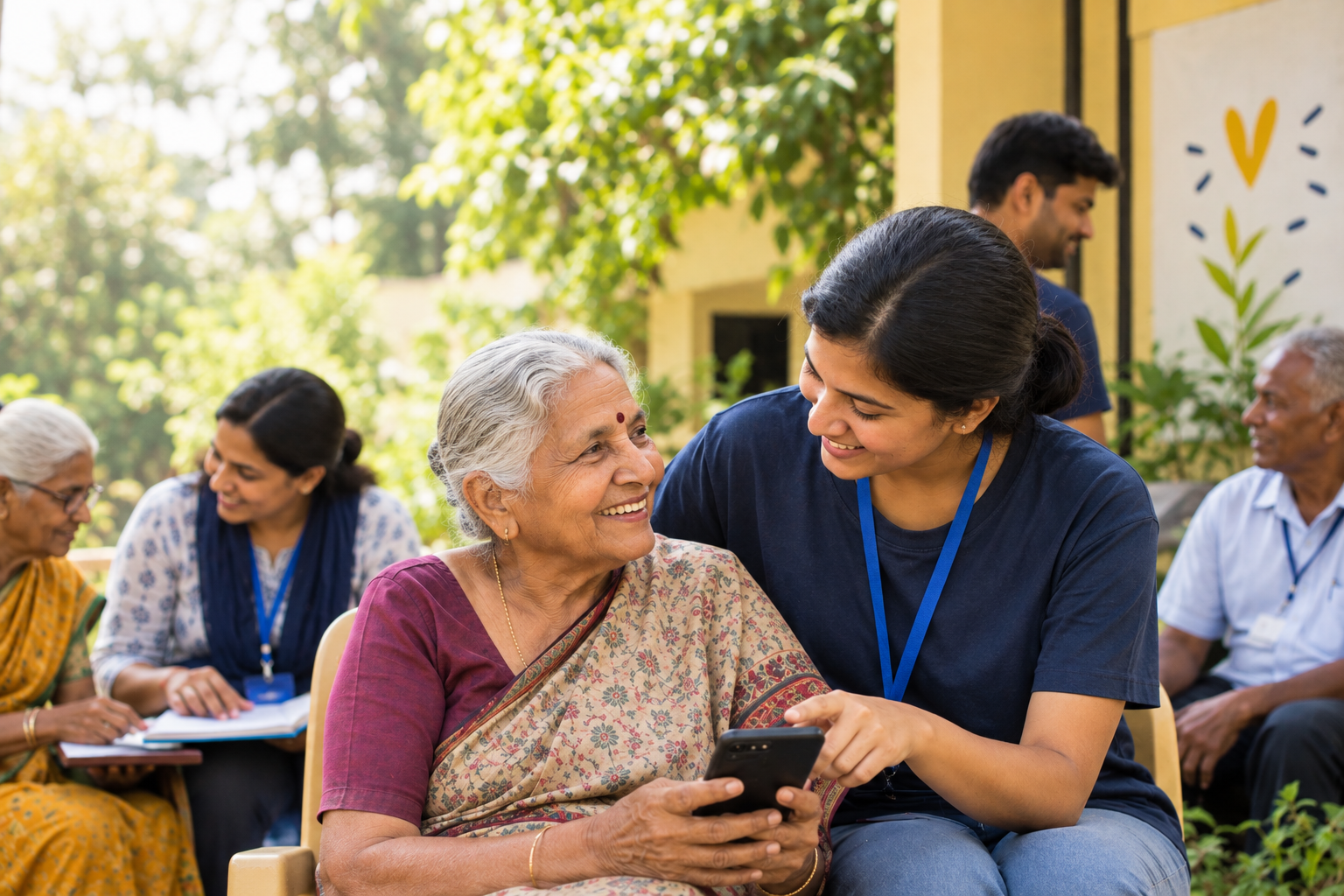
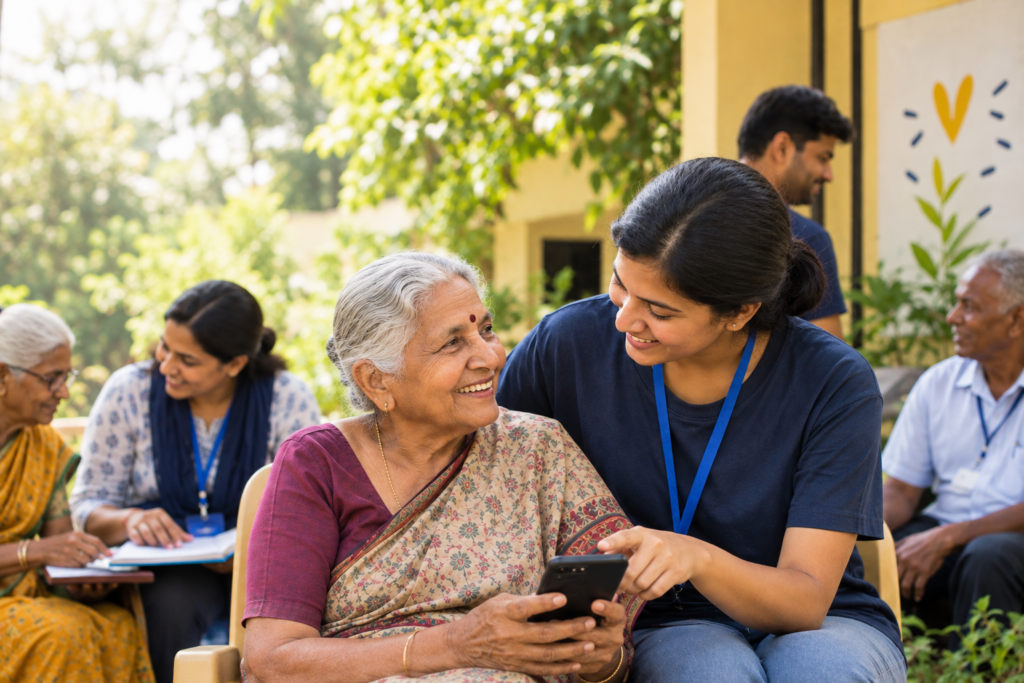
This shift is especially visible in elder care, where community interest has grown well beyond one-time donations. More people today are volunteering their time at senior care homes and active ageing centres, mentoring elders on digital literacy so they can use smartphones, video calls and UPI payments with confidence, or simply spending an afternoon at a nearby centre. This growing willingness to show up, teach a skill, or simply spend time with an elder reflects a wider recognition that ageing well is a shared responsibility, not something families or a few organisations should manage alone.
Supporting Local Communities
Buying from local vendors, participating in neighbourhood initiatives, or simply showing up for community events all strengthen the local support network. This kind of everyday participation is a quieter but equally meaningful form of giving.
Donating Essential Resources
Contributions like clothing, food, medical supplies, or household items address immediate, practical needs. Unlike cash donations, these resources go directly toward solving a specific problem, which can make the impact easier to see and understand.
Why Community-Based Support Matters
Support that comes from within a community tends to be more responsive to what people actually need, since it’s shaped by people who understand the local context firsthand. This is especially valuable for elders, families in transition, or anyone navigating a difficult period, where the right kind of help isn’t always just financial.
Community is central to how HelpAge India approaches elder care, and this shows up across several of its programmes. Through Elder Self Help Groups, elders come together to build financial stability and social connection with one another. Its Mental Health and Telehealth initiatives extend care beyond the clinic, connecting elders to support through community networks and remote consultations. The Elder Helpline offers a point of contact that families and neighbours can turn to when they need guidance, while Awareness & Training Workshops build digital, financial and legal literacy that helps elders stay independent and connected and build intergenerational bonds with their younger trainers. Each of these efforts depends on volunteers, local partners and everyday contributors working alongside HelpAge India, showing how community involvement turns a single organisation’s work into a much wider support system.
How Individuals Can Become Part of Community Care
Becoming part of community care doesn’t require a large commitment to start. It can begin with something as simple as volunteering a few hours a month, contributing to a local drive, or staying informed about causes in your area.
Creating a Culture of Consistent Giving
The real strength of community care comes from consistency rather than the size of any single contribution. Setting aside a small, regular amount of time or resources, even occasionally, adds up to meaningful, sustained support over time. Many organisations working on the ground today are built around encouraging exactly this kind of steady, community-driven philanthropy in India.
Final Thoughts
Community care shows that meaningful support is built through consistent action, not just one-time donations. Time, skills, essential resources, and regular contributions can work together to create stronger, more dependable support systems for people and communities. For individuals looking to make a difference, starting with one small, recurring commitment can be more sustainable than a single large gesture.
Organisations such as HelpAge India provide an established way to contribute to long-term community support, backed by decades of work with older people across India. Recognised with the UN Population Award 2020, HelpAge India demonstrates how sustained community engagement can turn individual acts of giving into meaningful, ongoing support.
FAQs
1. What is the difference between charity and community care?
Charity often refers to a one-time act of giving, such as a donation, while community care describes an ongoing system of support built from multiple contributors and forms of help. Community care tends to be more sustained and locally grounded than a single charitable act.
2. Do I need money to be part of community care?
No, community care includes non-financial contributions like volunteering time, sharing skills, or donating essential items. Many people who want to help poor people or support their community start by offering time or resources instead of money.
3. How is HelpAge India involved in community care?
HelpAge India runs community-based programs such as elder self-help groups, mobile healthcare units, and volunteer-driven initiatives that bring consistent, local support to elders across the country. These programs rely on more than financial donations, drawing on volunteers, community partners, and everyday contributors to sustain them.
4. Why is consistent giving more effective than occasional giving?
Consistent giving allows organisations and communities to plan and rely on support, rather than managing unpredictable gaps between contributions. It also tends to build stronger trust between givers and the communities they support over time.
5. How can I find community care opportunities near me?
Local NGOs, community centres, and established organisations working on causes like elder care or family support often have structured volunteering or giving programs. Reaching out directly is usually the simplest way to find an opportunity that matches your interests and availability.