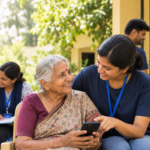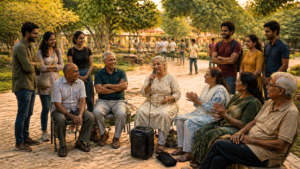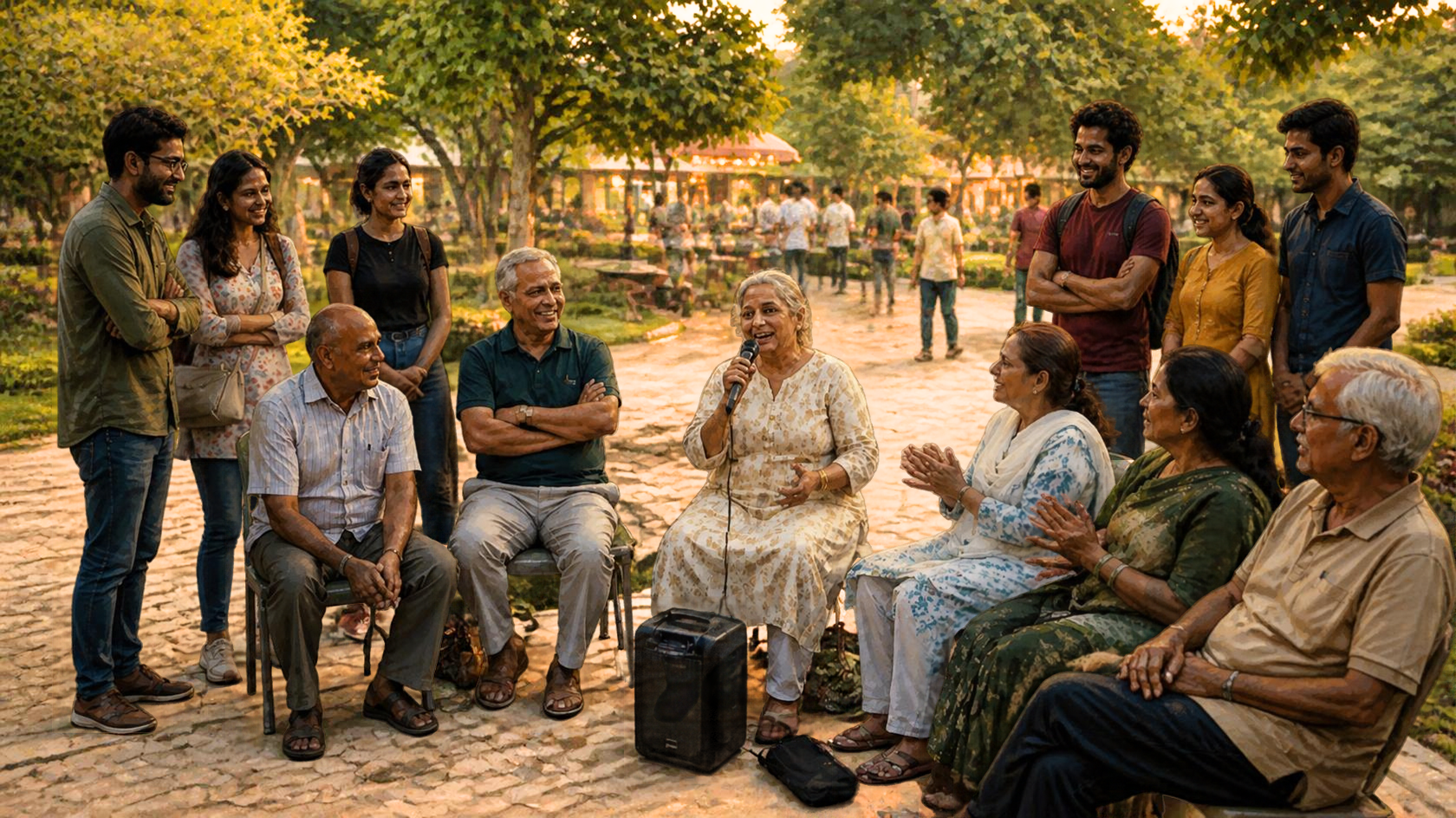
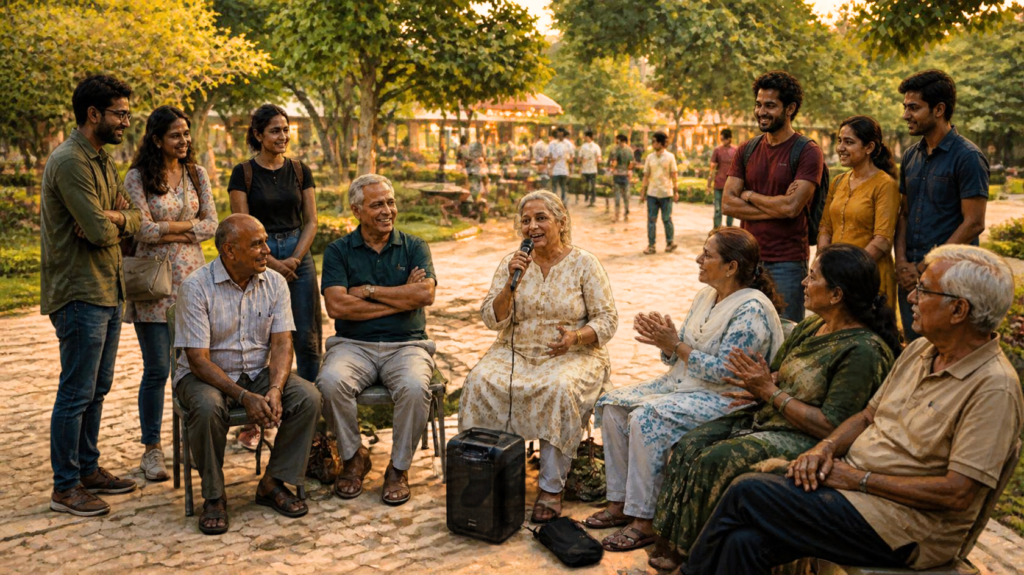
A random evening stroll in Delhi conjures up a vignette of thriving social life. Amid swarms of spirited youth spilling into every corner of the city, handfuls of elderly people huddle around a mic and speakers in parks, taking turns to sing old Bollywood classics. Small groups gather to practise yoga, discuss politics at a local tea stall, sing hymns on temple premises, or simply chat with their neighbours.
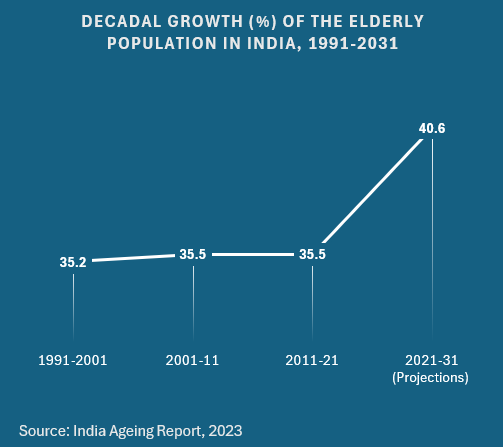
These seemingly mundane evening activities represent older people’s attempts to remain connected, engaged and socially active. Social connection is about the many ways people relate to and interact with others, and its absence might take the form of loneliness or social isolation. Despite its recognition as a determinant of healthy ageing, socialisation is still an undervalued aspect of care for the elderly, eclipsed by obvious considerations of health and finances. But as India’s elderly population grows, addressing this dimension of care for active ageing is becoming increasingly pertinent.
More than leisure
Socialisation gives older adults a source of companionship, comfort and a sense of purpose, yet the process of ageing itself presents multiple challenges to participation in social activities. Declining physical health, responsibilities around caregiving, limited social pool, family restrictions, or the effort of leaving of the house can all contribute in keeping older adults from venturing out. Having little avenue for social interaction takes away a much-needed respite from everyday fatigue. Almost a third of older people report that they feel alone at least sometimes, which can carry real consequences for health. This state has been associated with poor physical and mental health, and the World Health Organization lists it among the risk factors for the onset of dementia and early death.
The human cost shows up starkly in numbers too. As per the National Crime Records Bureau (NCRB) 2024 data, 16,036 individuals aged 60 and older died by suicide, with illness and family problems being the top drivers, struggles that become difficult to deal with without support. In such a situation, even briefly forged connections can make a difference, enabling people to cope with bereavement, illness, or familial neglect. For those without active job commitments, these exchanges may be one of the few practical avenues for engagement and everyday stimulation.
The shrinking circle
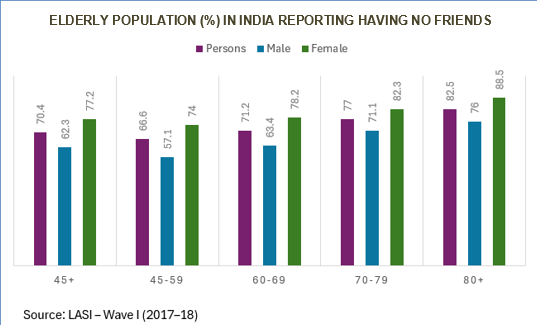
However, data from the first wave of the Longitudinal Ageing Study in India (2017-18) shows how thin these support systems have become. Around 70% of older adults (aged 45+ years) say they do not have any friends, and the percentage increases with age. Women are more likely to have no friends at all than men.
94% are not members of any social organisation, religious group, club or society, and 42% rarely take part in activities such as visiting a park, playing games, meeting relatives, or attending cultural functions, a number that climbs to 61.5% among those above 80. More than half never talk to friends over the phone, mail or email, and the digital shift has not closed this gap. In the newer channels of communication between people, HelpAge India’s 2025 report indicates that only 41% of elderly persons use a smartphone and only 13% use a computer, internet or social media, leaving the majority behind.
One relationship that many older people still rely on for support is the immediate family, but dynamics are changing even there. Nuclearisation of modern families is leaving elderly individuals more isolated than earlier generations were. But living with family does not equal companionship either. A significant portion of the day for many older adults living with children is spent in caregiving labour, looking after grandchildren or managing the household, which keeps them engaged but can also be a strain on their mental and physical health.
No room to gather
The city was always meant to complement family life; green spaces, markets and neighbourhood corners, where people unexpectedly run into each other. Urban sociologist Ray Oldenburg termed such informal gathering spots as “third places,” working best within walking distance and run locally rather than commercially. This resonates with the WHO classification of community spaces as one of the best ways to improve social connection among older people.
But that space is now shrinking. Accessible public spaces in Indian cities are being increasingly substituted by private and commercial, consumption-driven spaces. More often than not, elderly people, especially women, don’t have independent sources of income, and any place with an entry fee or a commercial pull simply excludes them.
Infrastructure adds another layer of difficulty. Unsafe road crossings, crowded streets and public transport, poor lighting, and a lack of shaded walkways make it hard for older people to move around the city. Out of total pedestrian fatalities in 2024, 40% were above 45 years of age. For many, being home is no longer a choice and becomes more of a necessity.
Making Connection Part of Care
Closer home, the issue has received policy acknowledgement. Both National Policy for Older Persons 1999 and Draft National Policy for Senior Citizens 2011 recognise the need to develop avenues like multi-purpose centres to encourage elderly community participation and improve the quality of their lives, down to neighbourhood/village level. Niti Aayog lays out several measures to increase engagement opportunities and developing accessible physical infrastructure for seniors, like reserving lower floors in residential societies for senior citizens. Moreover, numerous court judgments like Dr Ashwani Kumar (2019) and Bholenath Mevalal Nishad (2026) affirm that senior citizen care goes beyond bare subsistence, and must ensure dignity. In principle, all these formulations promote age-integrated society but rarely do they translate into a meaningful change on ground.
Internationally, some of this gap is beginning to be addressed. One emerging concept is social prescribing, where doctors and health workers direct people toward community activities rather than, or in addition to, medical treatment – viewing connection as care. Several countries are implementing experimental models to support elderly social life. In 2024, Japan officially recognised loneliness and isolation as national issues, and its Community Cafes have become a social hub for the elderly while raising awareness on conditions like dementia. The Senior Experten Service in Germany is a different approach, with retired experts and professionals sharing their expertise on a voluntary basis. Denmark, Sweden, the UK and the US have each implemented their own specific policies to encourage social connectedness in old age. These models embody attempts to create opportunities for older people to remain socially engaged and contribute to community life, with potential for adaptation in India.
Elderly people who sing in the park or gossip at the tea stall in the evenings aren’t simply filling time. They are holding on to something the rest of the system has often overlooked − connection. The United Nations has designated 2021 to 2030 as the Decade of Healthy Ageing, a signal that growing old should not mean growing invisible. As India’s population ages, healthcare and financial security will remain non-negotiable, but it is the small, ordinary things that make those later years worth living. Care for our elderly has to make room for that too.
This blog has been written by:
Muskaan Jain
She is a postgraduate student pursuing Public Policy at the Tata Institute of Social Sciences, Hyderabad.