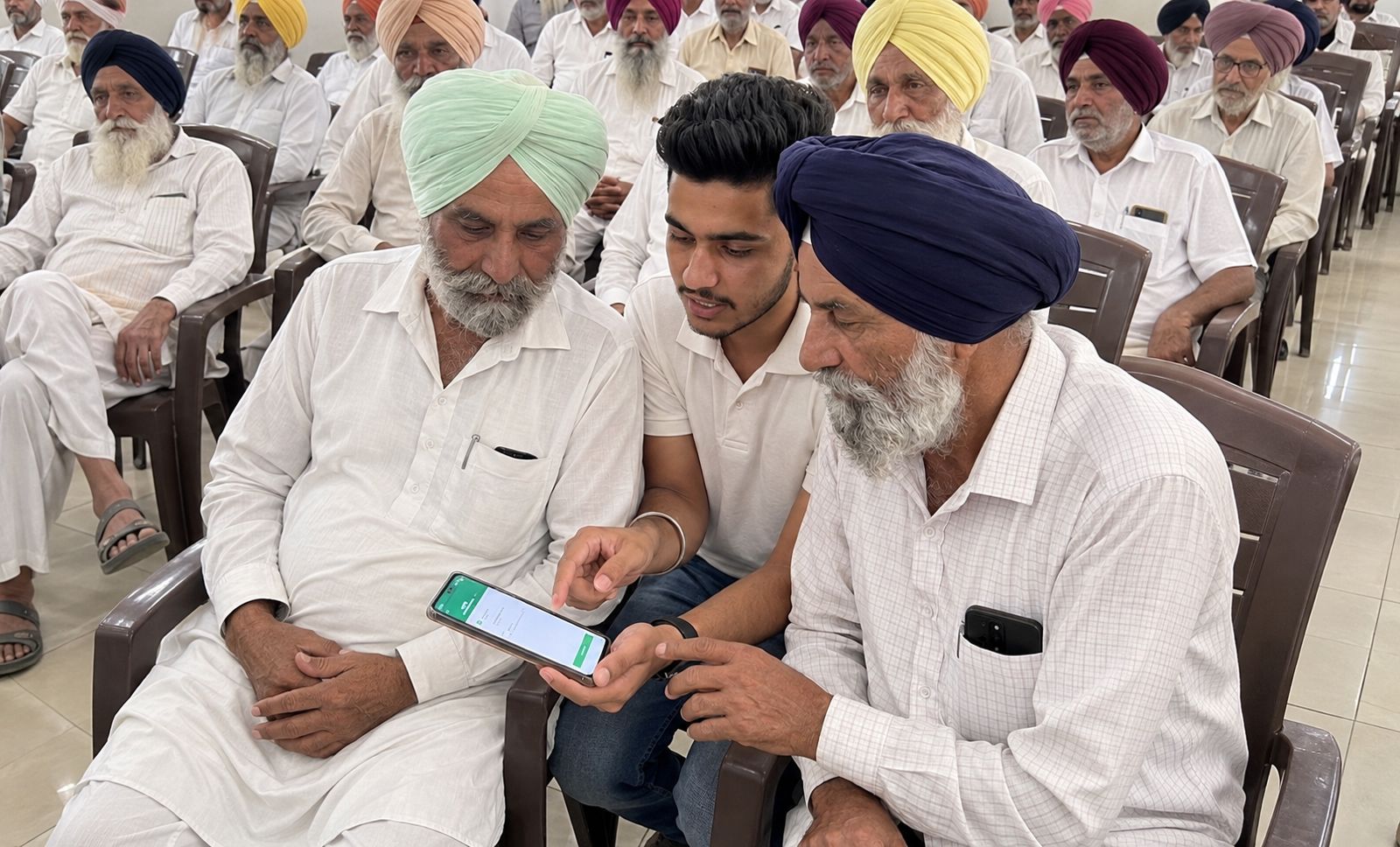

Ever received a phone call claiming to be from your bank, a WhatsApp message warning that your electricity connection will be disconnected, or someone posing as a police officer, claiming that your Aadhaar number has been linked to a crime? These situations are becoming increasingly familiar across India, where fraudsters use fear, urgency and official-sounding language to trick people into sharing personal information or transferring money.
For older persons, the consequences can be particularly serious. According to data shared by the Ministry of Home Affairs in Parliament, senior citizens reported 1,03,488 financial cyber fraud complaints in 2025, involving approximately ₹4,005 crore. Behind these figures are individuals who may have lost retirement savings, pensions or money set aside for healthcare and everyday expenses.
This guide explains the common phone and online scams affecting older persons in India, the warning signs to look out for and simple steps to stay safe. It also covers how families can support older relatives without taking away their independence and where to seek help, including India’s national cybercrime helpline 1930.
Why Scams Targeting Senior Citizens Are on the Rise
Banking, bill payments, shopping and staying close to family now happen on a phone and fraudsters have followed. Calls can be placed from anywhere, numbers can be made to look local and messages can closely copy the style of a real bank. Government reports show that cyber fraud complaints in India number in the lakhs each year, which tells us this is a widespread problem and not a personal failing.
It also helps to understand what scammers count on. They rarely choose people because of their age alone. They choose people who have a phone number, a bank account and a caring nature. Three things work in their favour:
- Trust in authority: Many of us were taught to respect officials, banks and institutions and scammers borrow that respect.
- Fear of consequences: Words such as “blocked”, “illegal” or “legal action” are used to create worry.
- Speed: The faster a decision is made, the less time there is to verify it.
Understanding these tactics is the surest way to feel prepared, not worried.
Common Senior Citizen Scams to Know About
Scripts change often, but most senior citizen scams follow one pattern. Someone claims to be an authority, describes a problem and then offers a quick fix that needs your money or private details. Once you recognise this pattern, a new version becomes much easier to spot. Three types appear most often:
1. Calls and Messages Claiming to Be from Banks or Officials
A caller says your account will be blocked, your KYC has expired, or a parcel in your name is under investigation. Some claim to be police or investigation officers and speak of a “digital arrest”, where you are told to stay on a video call and transfer money to prove your innocence. Official advisories are clear that no agency arrests or investigates anyone over a phone or video call. Genuine banks also never ask for OTPs or PINs.
2. Prize, Lottery and Investment Offers
A message announces that you have won a prize, or a group invites you to invest with guaranteed, unusually high returns. You are then asked to pay a “processing fee”, “tax” or “joining amount” first. A real prize never requires payment and genuine investments always carry some risk, so any promise of certainty is worth questioning.
3. Online Shopping and Payment Links
Fake websites and links sent by SMS or WhatsApp can look like real stores, delivery updates or refund pages. Another trick is a “collect request” on a payment app, where you are asked to approve a payment while being told you will receive money. Remember that your UPI PIN is only ever needed to send money, never to receive it.
A Quick Guide to Recognising Common Scams
| What you may hear or see | What is really happening | A safe response |
|---|---|---|
| “Your KYC has expired. Update it now or your account will be blocked.” | A fake link or caller is trying to collect your details. | End the call. Visit your bank branch or use its official app. |
| “This is the police. You are under digital arrest.” | Fraudsters are using fear to extract money. No such arrest exists. | Disconnect, do not transfer money and call 1930. |
| “You have won a lottery. Pay a small fee to claim it.” | An advance-fee trick. The prize does not exist. | Ignore and block the number. |
| “Join our investment group for guaranteed returns.” | A fake trading scheme, often run on messaging apps. | Check any firm’s registration with official regulators before investing. |
| “Your parcel is held. Click here to pay the delivery charge.” | A fake link designed to capture card or bank details. | Track parcels only on the courier’s official website or app. |
| “Install this app so our executive can fix the issue.” | A screen-sharing app that gives a stranger access to your phone. | Never install apps on a caller’s request. |
Warning Signs of Scams Targeting the Elderly
The real tool in any scam is pressure. Noticing the feeling of being rushed or frightened is itself a form of protection, because genuine organisations allow time to think and to verify. You do not need to see every sign below. Even one is a good reason to pause.
- Urgency: You are told to act immediately or face serious consequences. Real institutions rarely demand instant action over the phone.
- Secrecy: You are asked not to speak to family, friends or the bank. A trustworthy request can always be discussed openly.
- Requests for private details: OTPs, PINs, passwords or card numbers are asked for. These are never needed by genuine staff.
- Payment demands: A “fee”, “deposit” or “verification payment” is requested before anything is delivered.
- Unfamiliar links or apps: You are asked to click, download or share your screen with someone you do not know.
- Unknown numbers claiming authority: The caller insists on being official but will not let you verify them independently.
Simple Habits for Cyber Safety for Senior Citizens
Good cyber safety for senior citizens does not need technical knowledge. A few habits cover most situations and with practice they become as natural as locking the door at night. Each one gives you time and control, which is exactly what a scammer hopes you will not have.
1. Never Sharing OTPs, PINs or Passwords
These belong only to you. A genuine organisation will never need them, whoever the caller claims to be. If someone insists, that insistence is itself the warning sign. It can help to remember a simple line: “I do not share these with anyone.”
2. Pausing and Verifying Before Paying
Take a calm breath and end the call. Then contact the organisation using the number printed on your card, passbook or official website and not the number the caller gave you. A genuine matter will still be there a few minutes later and a short pause often brings clarity.
3. Using Official Apps and Websites
Download apps only from official app stores and type website addresses yourself instead of tapping links in messages. When searching for a customer care number, go to the company’s own website, because fake numbers are sometimes placed in search results. This keeps you on trusted ground even when a message looks convincing.
Small Settings That Add a Safety Net
A few one-time steps can protect your money quietly in the background and none of them needs a smartphone. Many can be arranged in a single visit to the bank branch, ideally with a trusted family member beside you.
- Set a daily limit at the branch. Ask the bank to set a comfortable daily limit for ATM, card and UPI transactions, so that a single mistake cannot empty the account.
- Register your mobile number for alerts. Banks send SMS alerts for electronic transactions to the registered number and these arrive on any basic phone, so it helps to confirm at the branch that the number on record is current.
- Add a trusted contact. Ask the bank to note a family member’s number as an alternate contact, so that someone you trust can be reached quickly if something unusual happens.
- Keep your passbook and statements up to date. Updating the passbook at the branch or at a kiosk each month, or asking for a printed statement, makes it easy to spot a payment that you do not recognise.
- Keep cards, PINs and OTPs private. A PIN or an OTP is meant only for you and no bank official, helper, or caller ever needs it. Asking a helper to bring back the receipt, instead of sharing the card and PIN, keeps errands safe.
- If you use a smartphone, add a screen lock and updates. A simple screen lock and regular software updates add a layer of protection and a family member can set both up in a few minutes.
- Keep a small safety card in your wallet or beside the phone. It can list the bank’s helpline number, a trusted family member’s number and the national cyber crime helpline 1930, so that help is easy to reach if something feels wrong.
If a transaction ever looks unfamiliar, informing the bank and calling 1930 as soon as possible gives the best chance of stopping the payment and recovering the money. RBI’s customer protection rules link reimbursement to prompt reporting.
What to Do If You Suspect a Scam
The first few hours matter most, because money transferred in a fraud can sometimes be traced and held if it is reported quickly. Acting promptly is never an admission of fault. Anyone can be approached by a scammer and there is no shame in it. Reporting also helps protect others from the same trick. The table below shows where to turn.
| Your situation | Where to report |
|---|---|
| Suspicious call, SMS or WhatsApp message and no money lost | Chakshu facility on the Sanchar Saathi portal (sancharsaathi.gov.in) |
| Money has been transferred or details shared | National Cybercrime Helpline 1930, ideally within 24 hours |
| You want to file a formal complaint | National Cyber Crime Reporting Portal (cybercrime.gov.in) |
| You need guidance or a listening ear | Elder Line 14567 |
If you have already lost money or shared details, these steps can help:
- Stay calm and stop all contact with the caller or sender.
- Call 1930 and share the transaction details, such as the amount, time and mode of payment.
- Inform your bank immediately so that it can take any possible action on your account.
- File a complaint at cybercrime.gov.in and keep screenshots of messages and payment receipts.
- Change passwords and PINs that may have been shared and tell a trusted person what has happened.
How Families Can Help Without Taking Over
Many elders welcome a second opinion but value their independence and rightly so. The most helpful support respects a person’s choices and treats them as capable partners in staying safe. Conversations tend to go best when they feel like sharing useful news, such as “I heard about a new kind of call scam today” and not like a warning. Families can help in several quiet ways:
- Talk about scams openly, without blame, so that no one feels embarrassed to ask questions.
- Agree on a simple rule: “If in doubt, call me before you pay.”
- Set up alerts and limits together, so the decisions remain the elder’s own.
- Keep helpline numbers in a visible place, such as on the fridge or saved in the phone.
- Respond with patience if something goes wrong, because kindness encourages early reporting.
Conclusion
Protection against fraud is not about distrusting everyone or giving up the conveniences of modern life. It is about knowing a few patterns, building a few habits and remembering that you are always allowed to pause. Whenever a call or message creates urgency, take that as your cue to slow down, end the conversation and verify through an official source. If you are ever unsure, speak with someone you trust, or reach out to the helplines shared above. Families, neighbours and communities all play a part too, by sharing what they learn and keeping conversations warm and free of judgement. HelpAge India believes that older adults are capable, valued members of society and that safety and confidence go hand in hand with dignity. Please share this guide with someone who may find it useful. For guidance or a listening ear, the Elder Line, 14567, is available.
FAQs
1. What are the top 10 scams targeting seniors?
Besides the scams covered in the table above, commonly reported ones include job offer scams, loan app fraud, romance or friendship scams, QR code payment tricks and impersonation of a relative in urgent need. Phishing emails and fake charity appeals also appear often. All of them rely on pressure and trust, not on technical skill.
2. What are 5 of the most current scams?
Five scams widely reported at present are voice or video calls imitating a family member, fake investment groups on messaging platforms, QR code payment tricks, fake customer care numbers found through online searches and fraudulent loan apps. Scripts change quickly, so verifying any unexpected request through an official source remains the most reliable approach.
3. How to prevent senior citizen scams?
Beyond the habits above, some families keep a separate bank account with a limited balance for online payments, which reduces risk. Checking statements monthly and discussing any new payment request with someone you trust also help.
4. What are the 10 most common scams?
Across all age groups, the most common scams include phishing emails, fake delivery notices, tech support fraud, job offer scams, romance scams, fake loan offers, impersonation of officials, fake investment schemes, online marketplace fraud and fake charity appeals. When giving to any cause, please use its official website to be sure your support reaches the right place.
5. How does HelpAge India support older adults in staying safe from scams?
HelpAge India has worked for decades for the dignity, health and independence of older person and awareness is a big part of that. Through its advocacy and outreach, it shares practical guidance on staying safe, including information on scams targeting senior citizen and it offers the Elder Line, 14567, where older adults can find guidance and a listening ear. You can also explore HelpAge India’s website for more resources on elder rights, health and wellbeing.
This blog has been written by:
HelpAge India